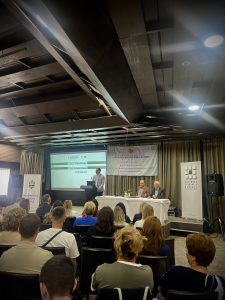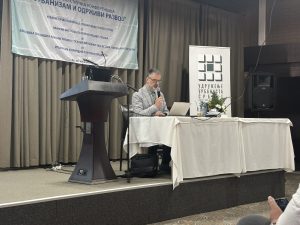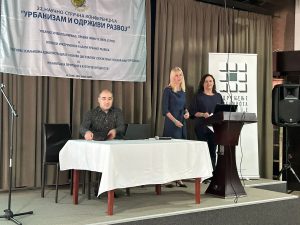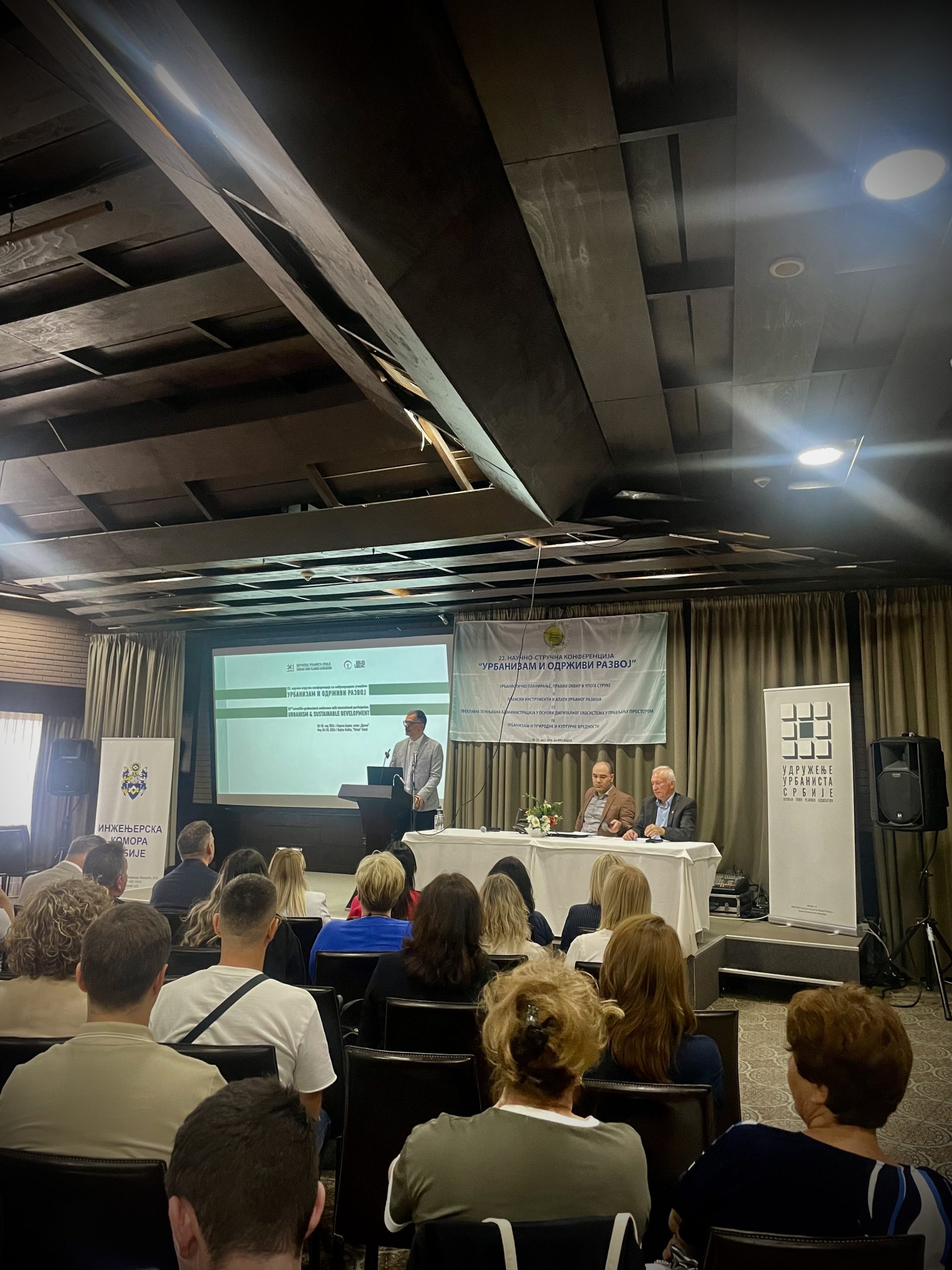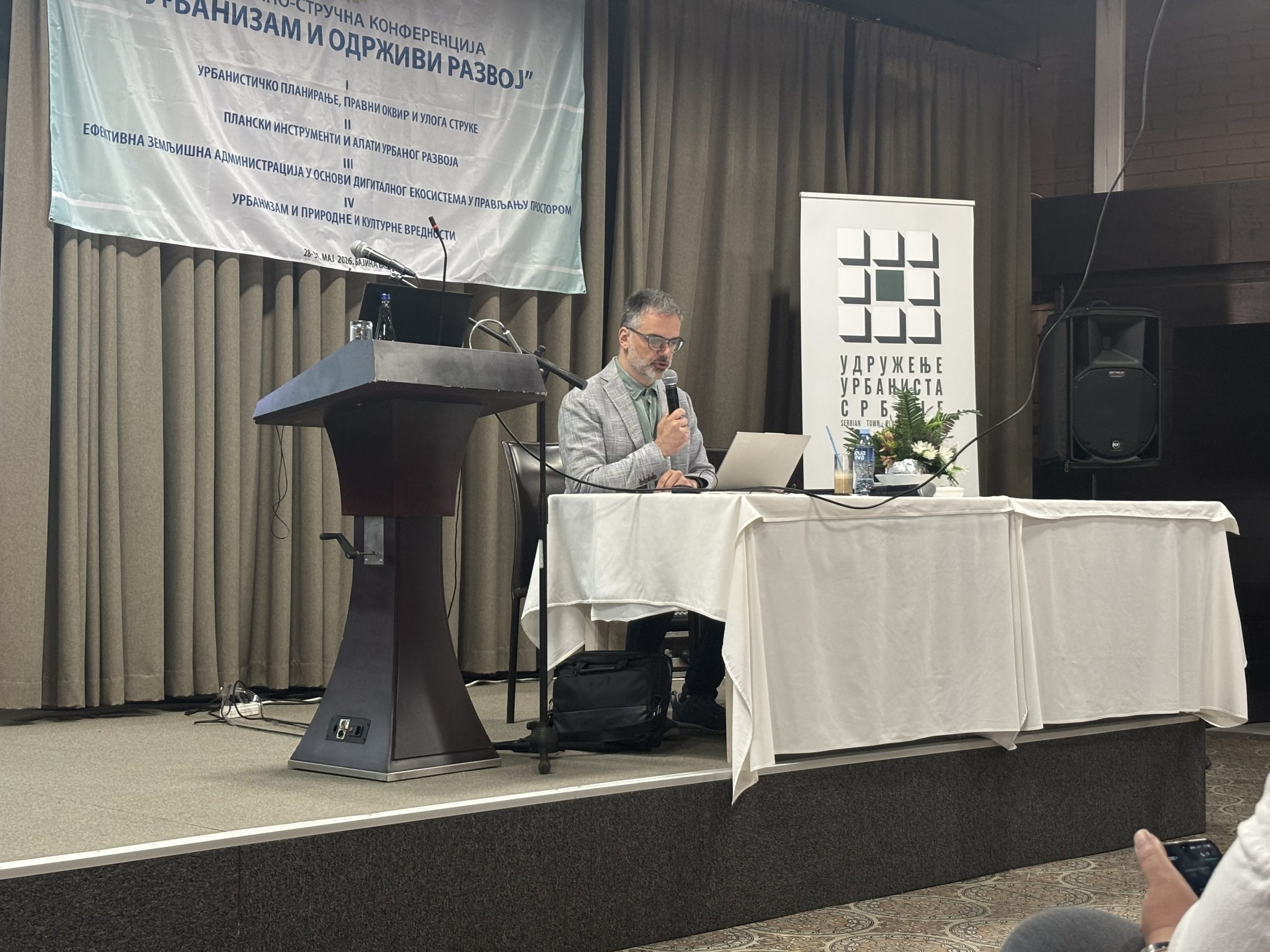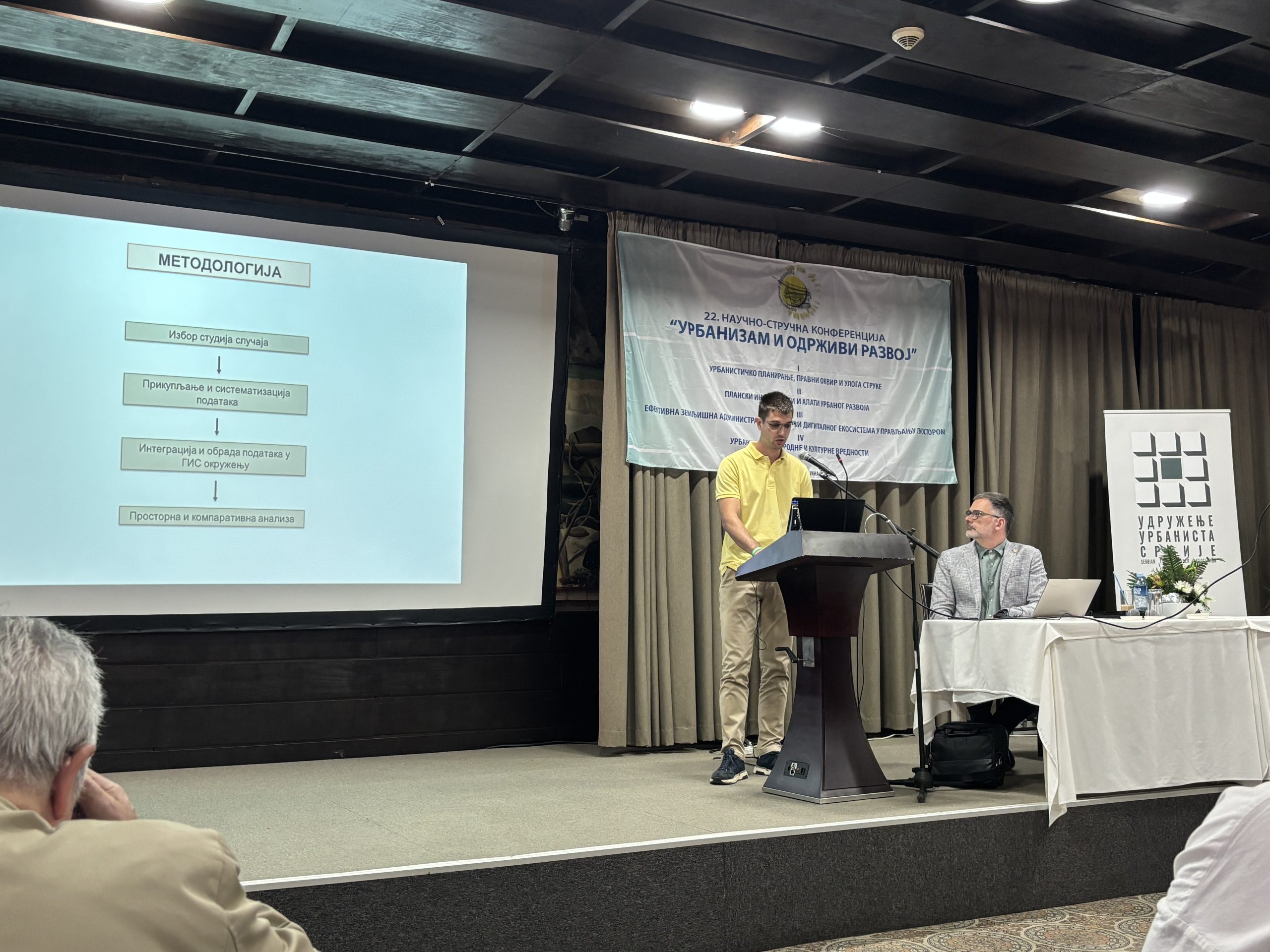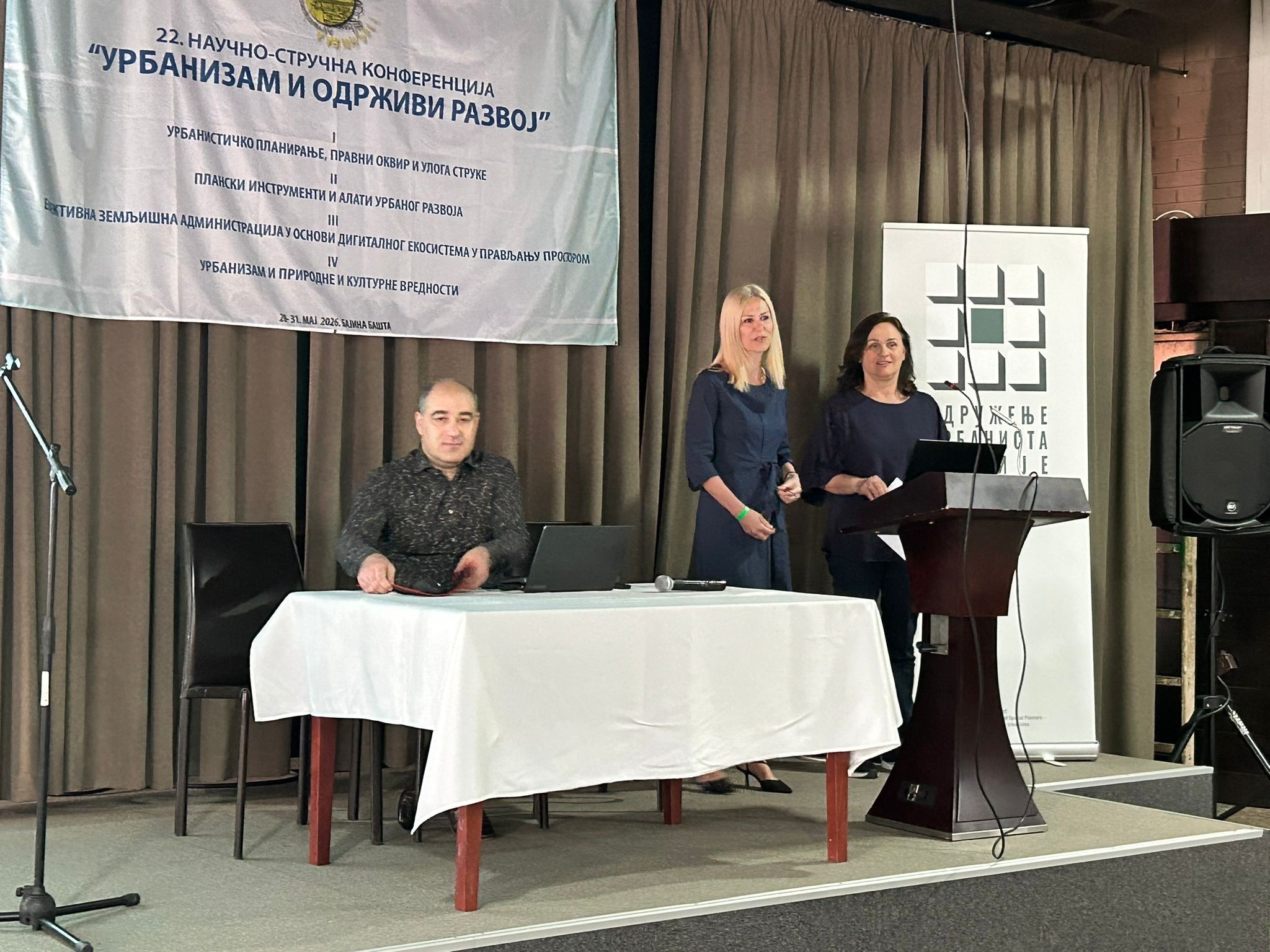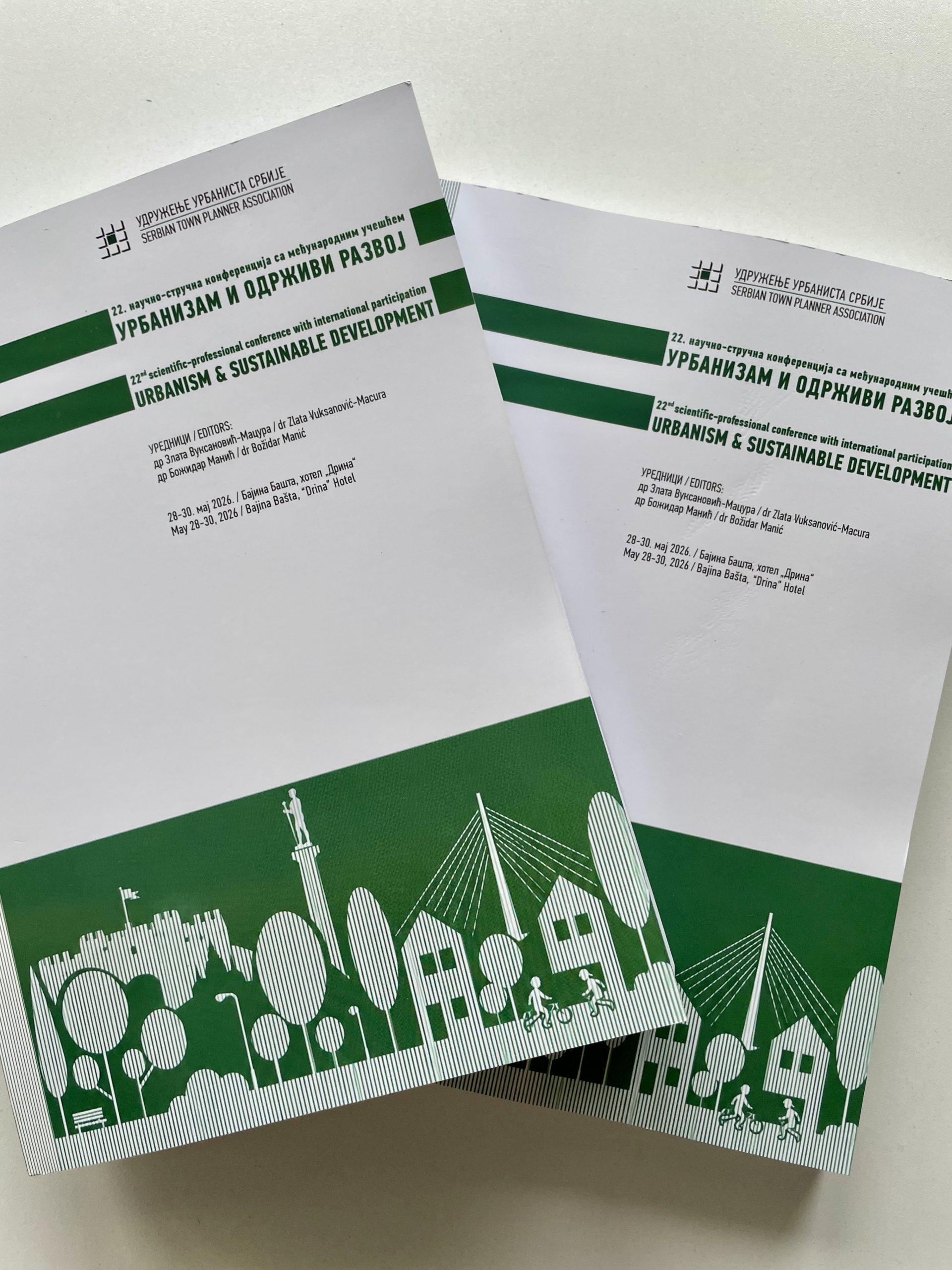
Organized by the Serbian Town Planners Association in cooperation with the Republic Geodetic Authority and the Institute of Architecture and Urban & Spatial Planning of Serbia (IAUS), with the support of the Ministry of Science, Technological Development and Innovation of the Republic of Serbia and the Serbian Chamber of Engineers, the 22nd International Scientific-Professional Conference with international participation “Urbanism & Sustainable Development” was held from 28 to 30 May 2026 at the Drina Hotel in Bajina Bašta.
The conference continues the long-standing tradition of the professional gathering formerly known as the Summer School of Urbanism. The programme included panel discussions, paper presentations, and thematic debates organized within four thematic areas:
I Urban Planning, Legal Framework, and the Role of the Profession
II Planning Instruments and Tools for Urban Development
III Urban Planning and Natural and Cultural Values
IV Effective Land Administration as the Foundation of a Digital Ecosystem for Spatial Governance
Researchers from the Institute of Architecture and Urban & Spatial Planning of Serbia participated in the conference with five papers.
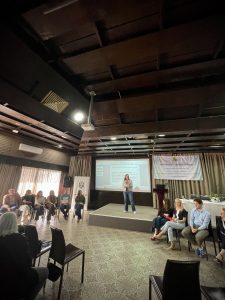
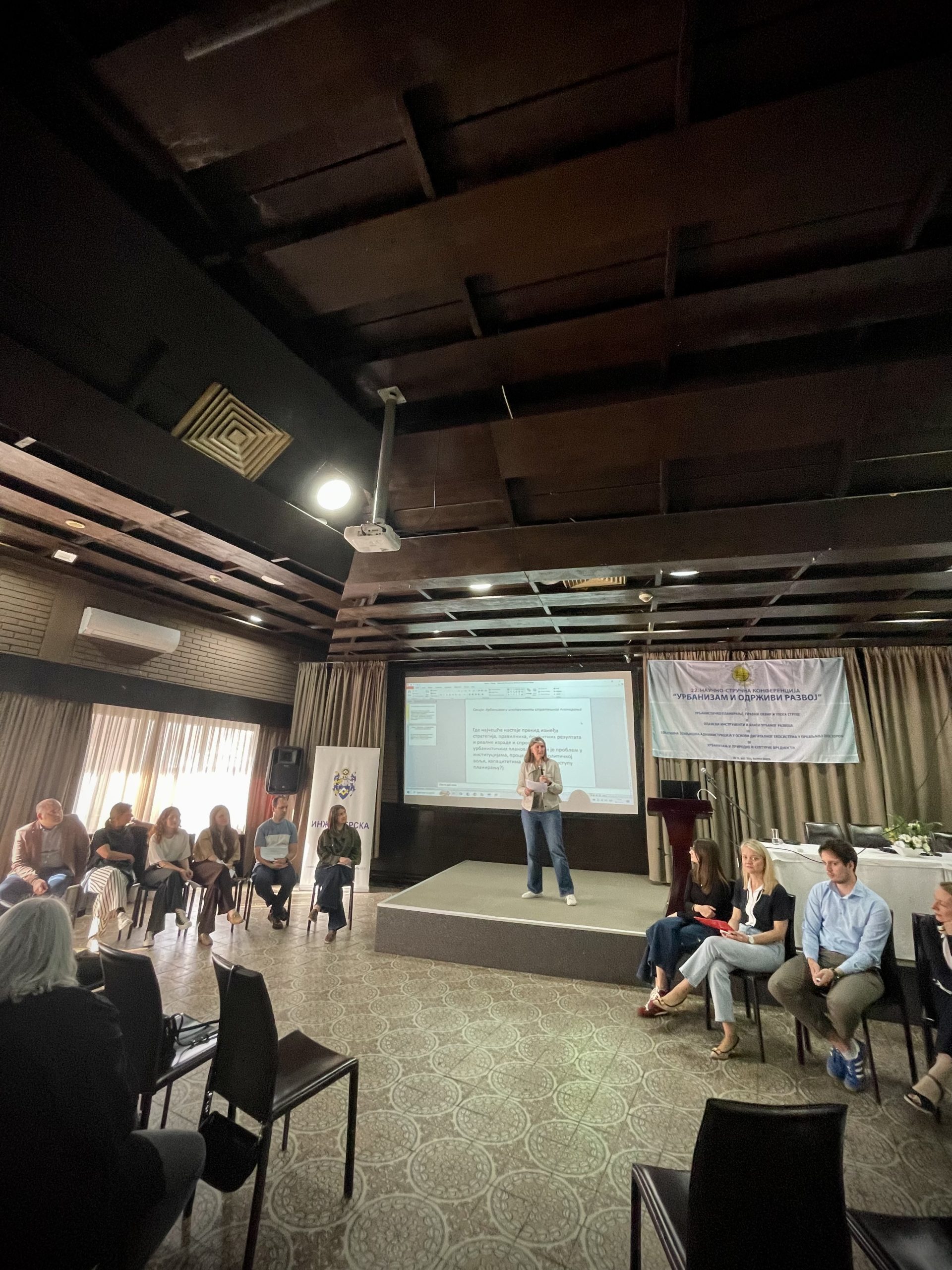
The session “Urban Planning and Strategic Planning Instruments”, which introduced a new format and dynamic to the conference programme, opened with a presentation of the research conducted by Dr. Аna Niković, Dr. Nataša Čolić Marković, and Dr. Božidar Manić, entitled „An approach to integrated planning and implementation of sustainable urban development strategies for small and medium-sized cities in serbia and their integrated territory based on the study of identity“.The paper explored the relationship between the concept of urban identity and the process of integrated strategic planning for sustainable urban development in small and medium-sized cities in Serbia, with particular emphasis on integrated territorial areas encompassing multiple local government units. The research was presented by Dr. Nataša Čolić Marković.
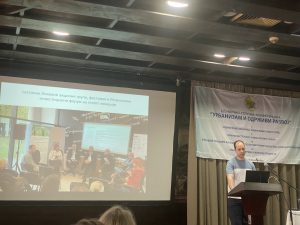
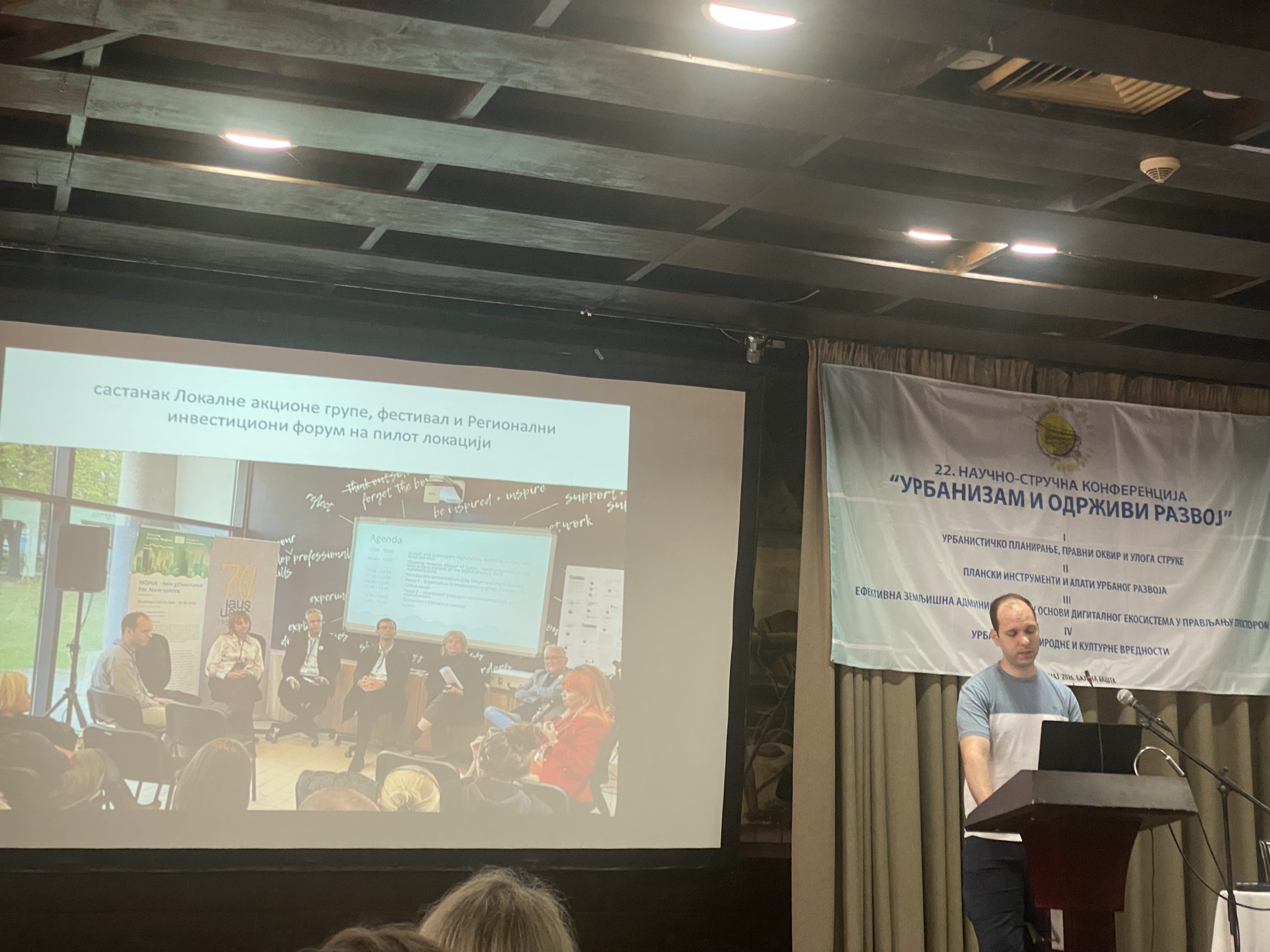
In the same session, which concluded with an extensive panel discussion, Dr. Borjan Brankov presented the research „Model for integrating green investments into reuse of degraded areas through the lenses of paricipatory planning and urban governance – the experience of the City of Šabac in the INTERREG NONA PROJECT“, on behalf of the research team consisting of Dr. Nataša Čolić Marković, Dr. Nataša Danilović Hristić, Dr. Borjan Brankov, Dr. Sanja Simonović Alfirević, and Dejan Vujić.
The purpose of the model for integrating green investments into the revitalisation of degraded areas is to provide guidelines complementary to traditional instruments of urban planning and governance, and to enable their more effective application. An interactive audience survey was conducted during the presentation, encouraging active participation in the discussion.
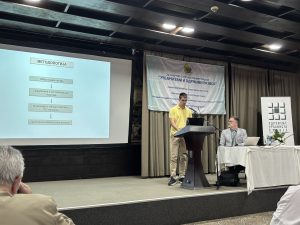
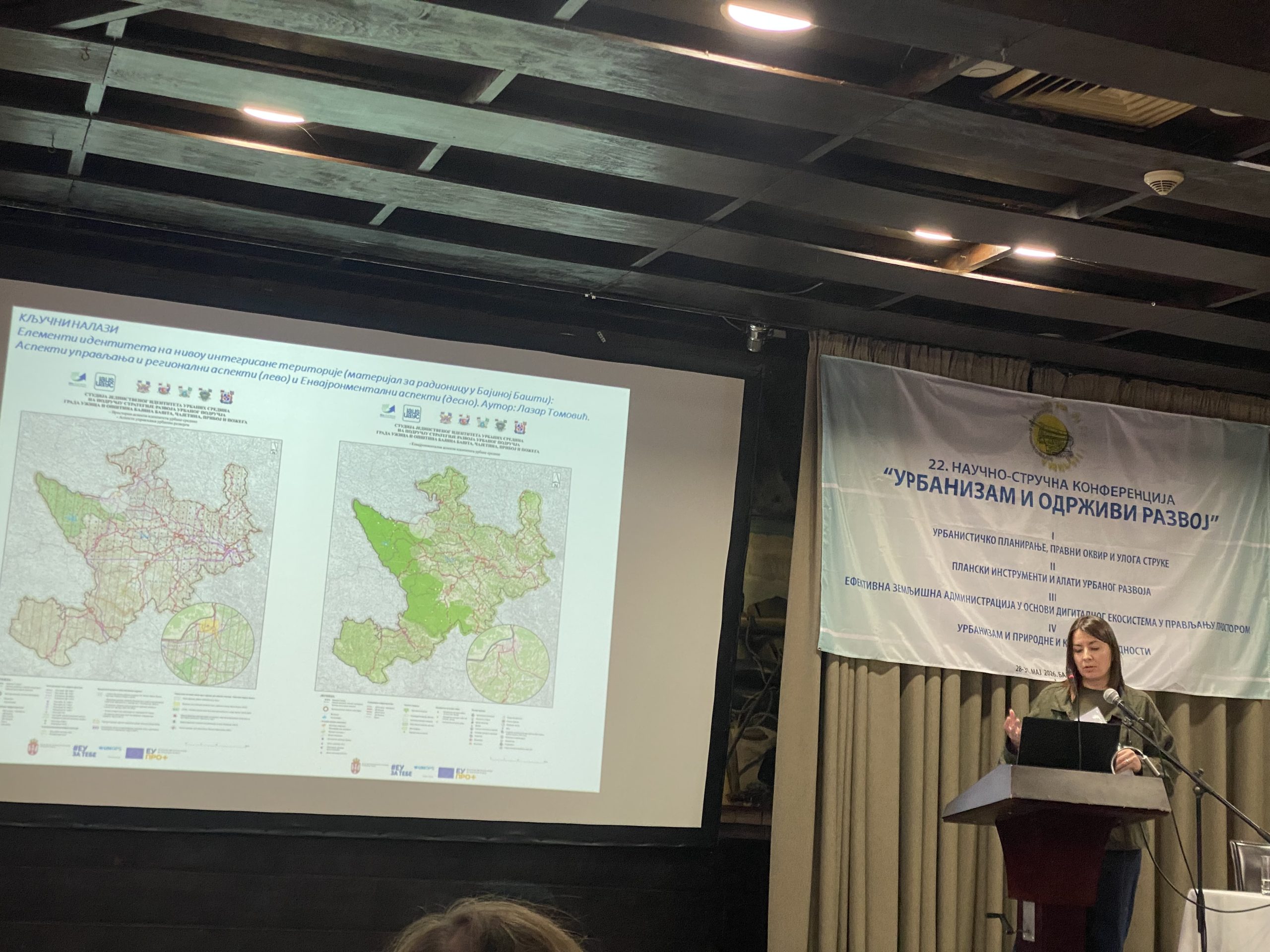
Within the session “Urban Planning and Digital Tools”, Lazar Tomović, a scholarship holder of the Ministry of Science, Technological Development and Innovation, presented the paper „Integration of multiple geospatial databases in waste management planning: a comparative GIS analysis across different planning levels“, authored by Dr. Marina Nenković-Riznić and Lazar Tomović. The paper presented the results of a comparative GIS analysis conducted within the preparation of multiple planning documents at different hierarchical levels, including spatial plans for special-purpose areas. The research focuses on assessing the current state of municipal infrastructure, with particular emphasis on waste management and the spatial distribution of illegal dumpsites. The results supported the definition of potential recycling yard locations, incorporating socio-spatial factors, and highlight the importance of integrated geospatial data management in waste management planning.
Within the session “Urban Planning and Natural and Cultural Values”, Dr. Marija Lalošević, together with co-author Sonja Kostić, presented the paper „Heritage at the crossroads of preservation and capital interests: urban planning and industrial heritage protection“. The paper analyzes the relationship between urban planning and the preservation of industrial heritage (heritage of technical culture) based on examples from practice in Belgrade that illustrate the possibilities of integrating the protection of cultural property, public interest and private investments through planning instruments and protection conditions prescribed by competent institutions. The aim of the paper is to highlight the importance of continuous planning, plan implementation instruments and the application of the principles of international charters and recommendations in the preservation of industrial heritage as a resource for long-term sustainable urban development.
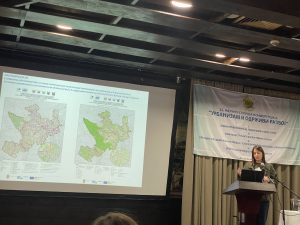
The paper „Raising Awareness of the Importance of Local Community Participation in Planning of Mining Areas during the MINIPART Project“, authored by Dr. Tamara Maričić, Dr. Marijana Pantić, Dr. Milena Toković, Dr. Milovan Vuković, and MA Dušanka Milosavljević, presented several levels of activities carried out during the first two years of the MINIPART project (Enhancing Public Participation in the Spatial Planning of Mining Regions). The research included the analysis of previous experiences, a survey conducted among residents of the Bor and Majdanpek mining region, interviews with key stakeholders, and focus group workshops organized in Bor.
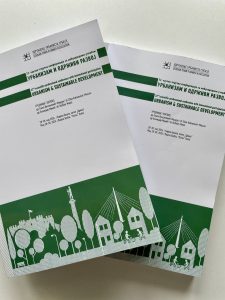
The papers presented by IAUS researchers were published in the Conference Proceedings edited by Dr. Zlata Vuksanović Macura, Chair of the Scientific Committee, and Dr. Božidar Manić, President of the Serbian Town Planners Association.
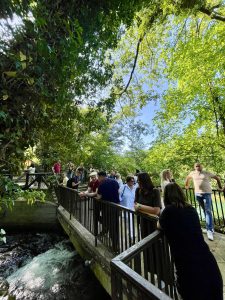
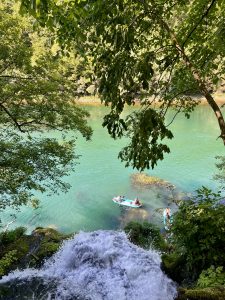
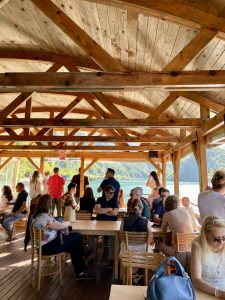
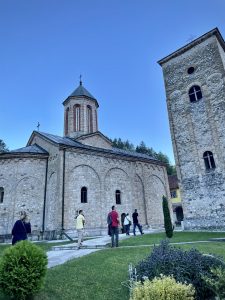
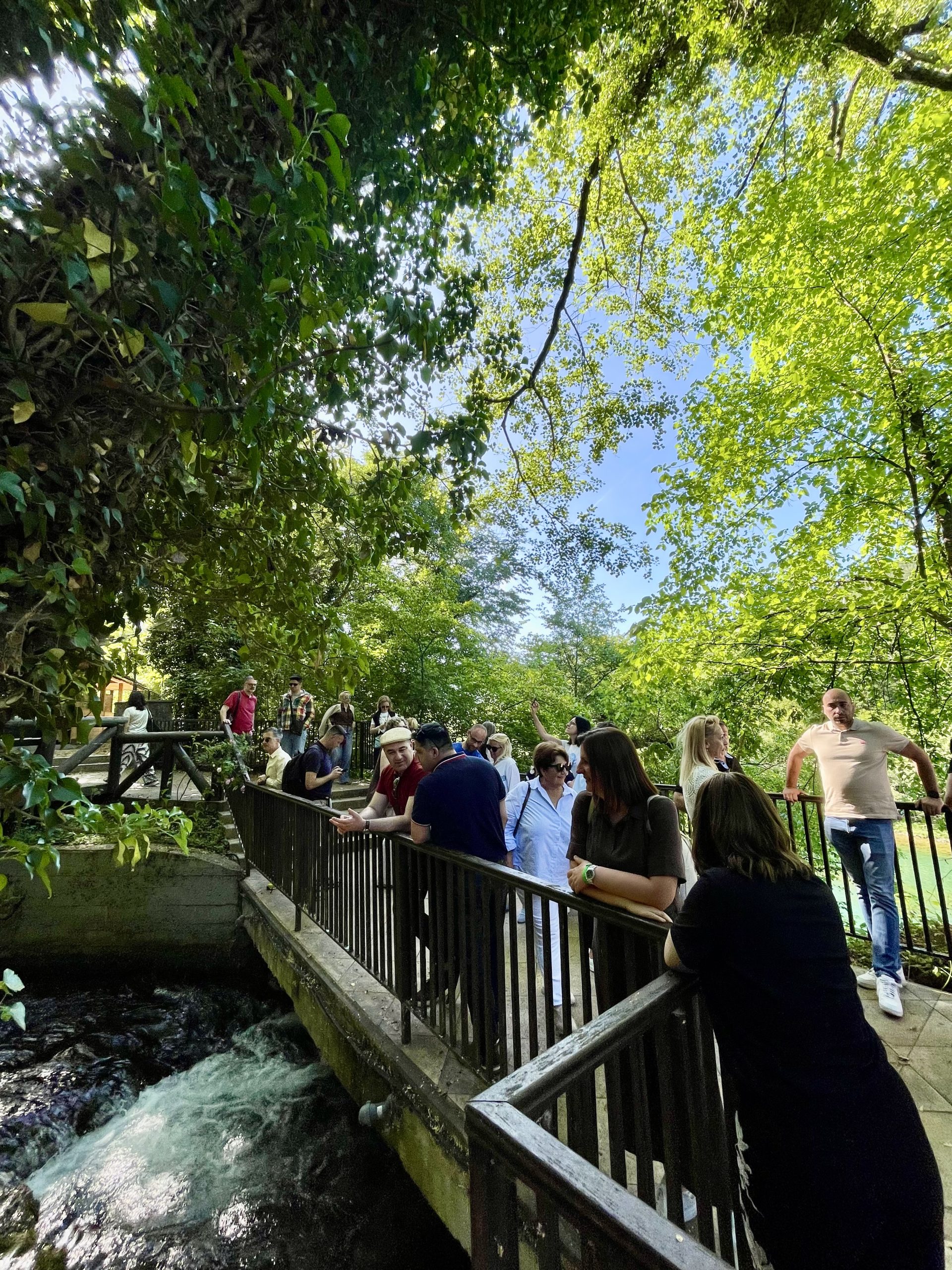
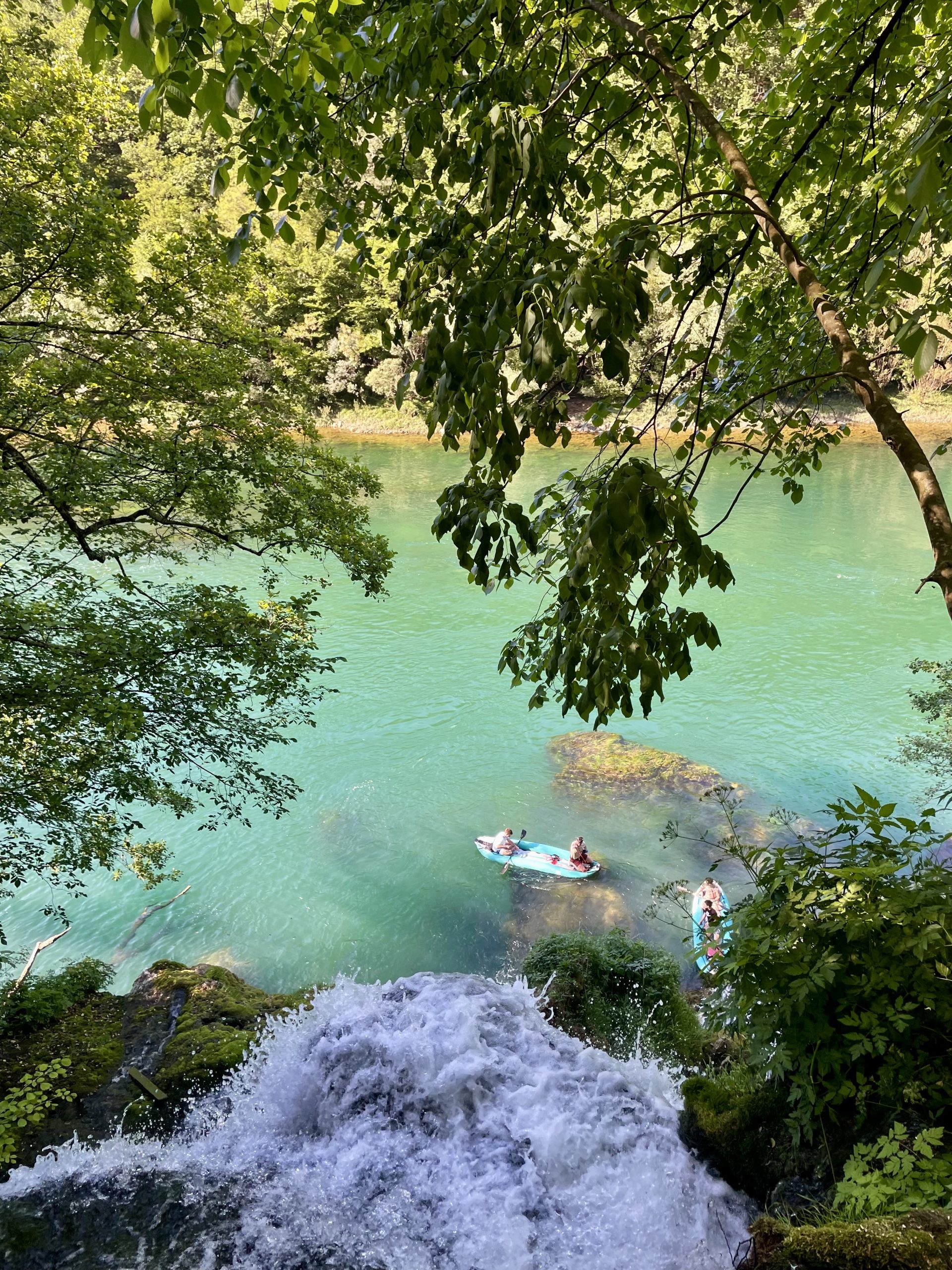
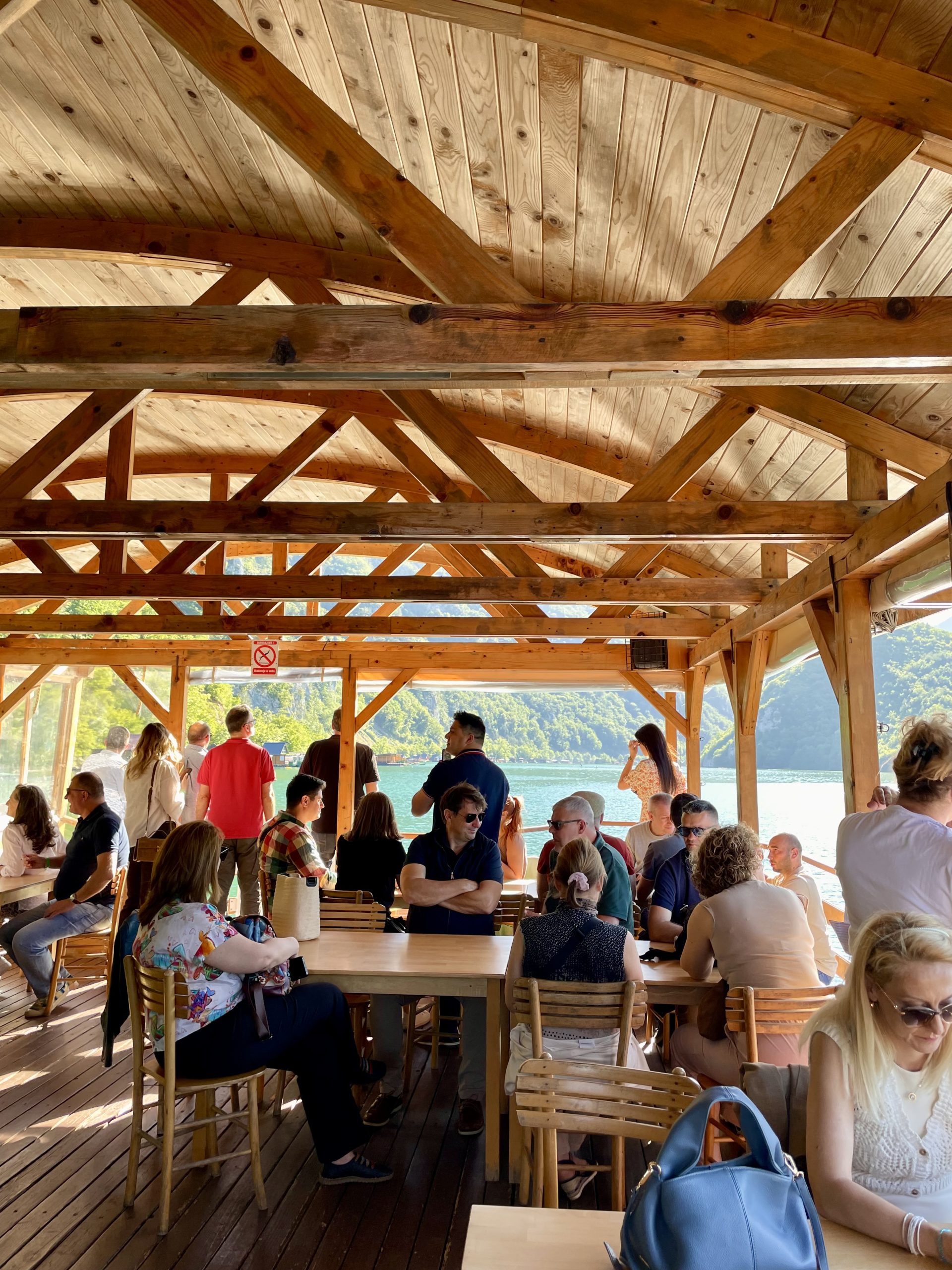
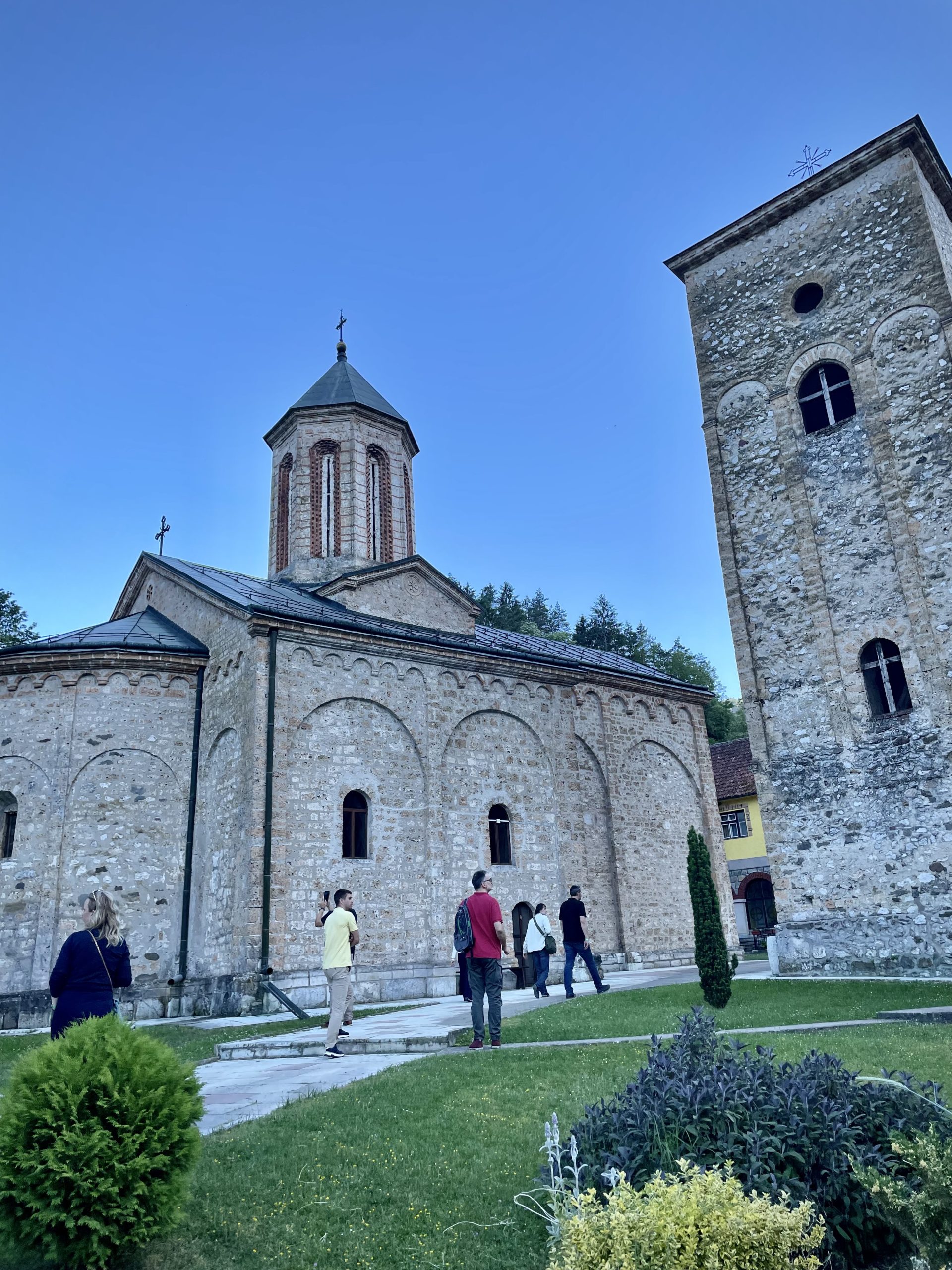
In addition to the scientific programme, professional networking and knowledge exchange were further encouraged through a study excursion that included visits to the Rača Monastery, the confluence of the Vrelo River with the Drina River, and a boat tour on Lake Perućac.